

What Tests Are Required Before Cervical Cancer Surgery in Raipur?

Hearing the words “cervical cancer” instantly changes the way a woman—and her family—looks at life. Questions come faster than answers. Fear mixes with urgency. And somewhere in between, there’s the overwhelming task of understanding what happens next.
One of the very first concerns that comes up before planning cervical cancer surgery in Raipur is surprisingly simple, yet deeply confusing:
“What tests will I have to undergo before surgery?”
This guide exists to answer that question clearly, patiently, and honestly—without medical jargon, without rushing, and without adding to the anxiety.
Why Pre-Surgery Tests Matter More Than People Realize
Before any surgery, especially cancer-related surgery, doctors need clarity. Not assumptions. Not guesswork.
The tests done before cervical cancer surgery help doctors:
- Confirm the stage of cancer
- Understand how far it has spread
- Decide whether surgery is the best option
- Choose the safest surgical approach
- Reduce complications during and after surgery
This is why the best doctors for cervical cancer in Raipur never rush straight into treatment. They slow things down first—because accuracy saves lives.
Step One: Confirming the Diagnosis Clearly
Many women come to hospitals already worried, sometimes with incomplete reports or conflicting opinions. The first set of tests focuses on confirming what’s truly happening inside the body.
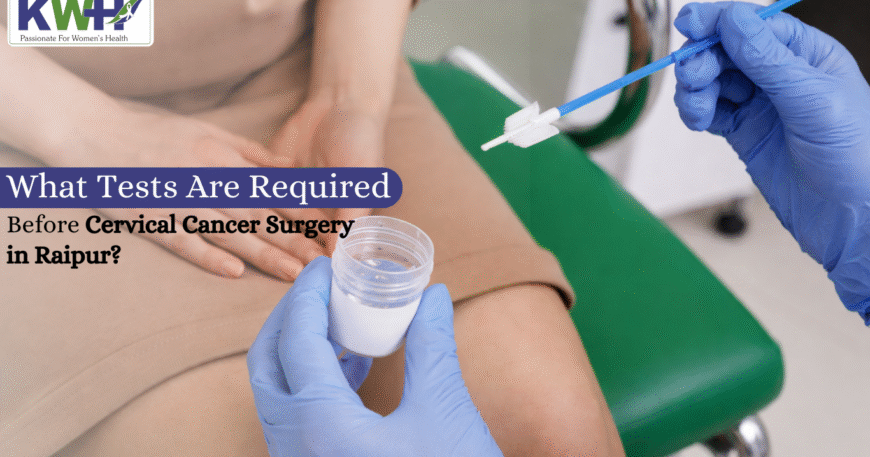
Pap Smear Test
Often the starting point, this test looks for abnormal cells on the cervix.
- It’s quick
- Usually painless
- Helps detect early changes
While a Pap smear alone doesn’t confirm cancer, it raises the first red flag that something needs deeper investigation.
HPV Test
Since most cervical cancers are linked to high-risk HPV strains, this test checks for the presence of the virus.
Doctors often use this test alongside the Pap smear to decide the next steps.
Biopsy: The Most Important Test Before Surgery
A biopsy is the test that turns suspicion into certainty.
Cervical Biopsy
A small tissue sample is taken from the cervix and examined under a microscope.
This test answers critical questions:
- Is the growth cancerous?
- What type of cervical cancer is it?
- How aggressive does it appear?
Every decision about cervical cancer surgery in Raipur is built around biopsy results. Without this test, surgery planning simply doesn’t move forward.
Colposcopy: Seeing the Problem Clearly
If earlier tests suggest abnormal cells, doctors often recommend a colposcopy.
This procedure uses a special magnifying instrument to examine the cervix in detail.
It helps doctors:
- Identify abnormal areas
- Decide where to take biopsy samples from
- Assess visible spread
Colposcopy brings visual clarity before surgical planning begins.

Imaging Tests: Understanding the Cancer’s Reach
Once cancer is confirmed, imaging tests help doctors understand how far it has progressed.
Pelvic Ultrasound
This is usually the first imaging test done.
It helps check:
- Uterus and ovaries
- Size of the tumor
- Surrounding pelvic structures
It’s non-invasive and gives a quick overview.
MRI Scan
MRI is one of the most crucial tests before cervical cancer surgery.
It provides detailed images of:
- Cervix
- Uterus
- Nearby tissues
- Lymph nodes
MRI results help doctors decide whether surgery alone is enough or if other treatments may be required first.
CT Scan or PET Scan (If Required)
In certain cases, doctors may advise advanced imaging to check if cancer has spread beyond the pelvis.
These scans are usually recommended by best doctors for cervical cancer in Raipur only when necessary, not routinely.
Blood Tests: Preparing the Body for Surgery
Cancer surgery isn’t just about removing disease—it’s also about ensuring the body can handle the procedure safely.
Complete Blood Count (CBC)
Checks:
- Hemoglobin levels
- White blood cells
- Platelets
Low hemoglobin is common in cervical cancer patients and may need correction before surgery.
Liver & Kidney Function Tests
These tests ensure vital organs are functioning properly—especially important for anesthesia and recovery.
Blood Sugar & Infection Markers
Uncontrolled sugar levels or hidden infections can delay healing. These tests help prevent post-surgery complications.

Cardiac & Fitness Evaluation
Before surgery, doctors must ensure the heart and lungs are fit enough.
This may include:
- ECG
- Chest X-ray
- Pulmonary assessment (if required)
These tests are routine, especially for women above a certain age or with existing health conditions.
Anesthesia Evaluation: A Crucial Step
Before cervical cancer surgery, patients meet an anesthetist who reviews:
- Medical history
- Past surgeries
- Allergies
- Test reports
This step ensures the surgery is not only effective but also safe.
Fertility & Hormonal Discussions (When Relevant)
For younger women, fertility preservation may be discussed.
Tests and consultations may include:
- Hormonal assessments
- Ovarian evaluation
- Counseling sessions
The best doctors for cervical cancer in Raipur understand that treatment isn’t just about survival—it’s also about life after cancer.
Why Choosing the Right Hospital Matters
Pre-surgery testing isn’t just about what tests are done—but how carefully they are interpreted.
A reputed private hospital for cervical cancer in Raipur offers:
- Coordinated diagnostics
- Multidisciplinary tumor boards
- Personalized treatment planning
- Emotional support for patients and families
This holistic approach reduces delays and confusion during an already overwhelming time.
Common Fears Women Have Before These Tests
It’s normal to feel anxious. Many women worry about:
- Pain during tests
- Long waiting periods
- Conflicting reports
- Financial burden
Clear communication, compassionate doctors, and structured testing protocols ease much of this stress.

FAQs: Tests Before Cervical Cancer Surgery in Raipur
1. Are all these tests mandatory?
Not every patient needs every test. Doctors recommend tests based on individual cases.
2. How long does pre-surgery testing take?
Usually 7–14 days, depending on test availability and urgency.
3. Are these tests painful?
Most are minimally uncomfortable. Doctors ensure patient comfort at every step.
4. Can surgery be delayed if tests show issues?
Yes, and that’s often a good thing. Correcting health issues before surgery improves outcomes.
5. Are these tests covered by insurance?
Many tests are covered, especially when done at a recognized private hospital for cervical cancer in Raipur.
Conclusion: Preparation Is Protection
Cervical cancer surgery doesn’t begin in the operation theatre—it begins with understanding, preparation, and trust.
Each test before surgery plays a role in protecting the patient, guiding doctors, and improving recovery. When handled thoughtfully, this phase transforms fear into clarity.
Hospitals like Kamla Women Hospital are known for following structured, patient-centric diagnostic protocols—ensuring women feel supported, informed, and confident at every stage of treatment.
If you or a loved one has been advised to have cervical cancer surgery, don’t hesitate to ask questions. Understanding the tests beforehand brings peace of mind and strengthens decision-making.
Choose doctors who explain—not intimidate.
Choose hospitals that guide—not rush.
Choose care that treats the patient, not just the disease.
Because when it comes to cervical cancer, clarity before surgery can change everything.
What Tests Are Required Before Cervical Cancer Surgery in Raipur?