
Hysterectomy for Cervical Cancer in Raipur: When Is It Recommended?

Hearing the word “hysterectomy” can feel heavy. For many women and families, it brings a wave of questions all at once.
Will the uterus need to be removed?
Is surgery the only option?
Can cervical cancer be cured with surgery?
How long will recovery take?
Which doctor should we trust?
When cervical cancer is diagnosed, the treatment journey becomes emotional, practical, and urgent. Families want clarity, but they often receive too much information too quickly. Some hear about surgery. Some hear about radiation. Some are told to meet a cancer specialist. Some start searching online late at night, trying to understand what the doctor meant.
This blog is written to make that decision easier to understand.
A hysterectomy is one of the surgical options used in cervical cancer treatment, especially in selected early-stage cases. But it is not recommended for every patient. The decision depends on the cancer stage, tumor size, spread, age, fertility goals, overall health, and the opinion of the treating gynecologic oncology team.
So, if you are searching for Cervical Cancer Surgery in Raipur, looking for the Best Doctors for Cervical Cancer in Raipur, or trying to choose a Private Hospital for Cervical Cancer in Raipur, this guide will help you understand when hysterectomy may be recommended and what families should ask before taking the next step.
Understanding Cervical Cancer in Simple Words
Cervical cancer starts in the cervix, which is the lower part of the uterus that connects to the vagina. In most cases, cervical cancer develops slowly over time. It may begin with abnormal cell changes that can later turn into cancer if not detected and treated early.
This is why screening is so important. Pap tests, HPV testing, and regular gynecological checkups can detect changes before they become serious. When cervical cancer is found early, treatment options are usually more effective and may be less extensive.
Cervical cancer treatment may include surgery, radiation therapy, chemotherapy, targeted therapy, immunotherapy, or a combination of these, depending on the stage and medical condition of the patient. Mayo Clinic notes that treatment depends on several factors, and early cancers that have not spread beyond the cervix are often treated surgically.
What Is a Hysterectomy?
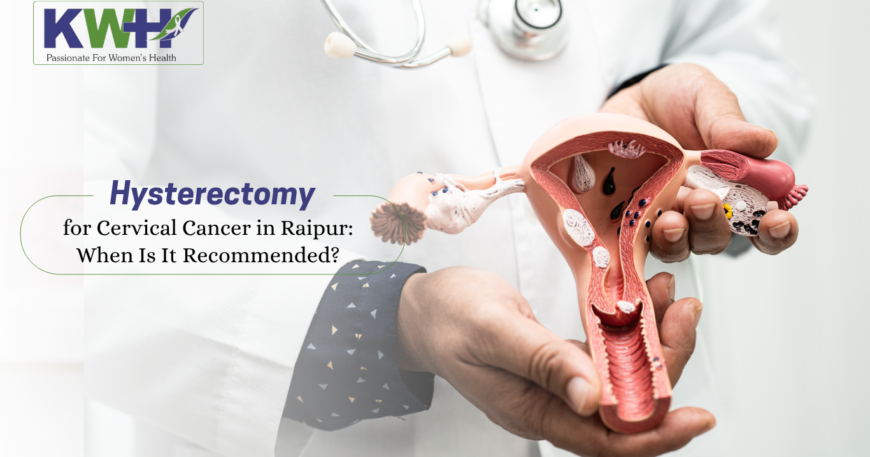
A hysterectomy is a surgery to remove the uterus. In cervical cancer treatment, the cervix is also removed. Depending on the type and extent of cancer, surrounding tissues, part of the vagina, and nearby lymph nodes may also be removed.
The National Cancer Institute explains that different types of hysterectomy may be used for cervical cancer, including total hysterectomy and radical hysterectomy. In a total hysterectomy, the uterus and cervix are removed. In more extensive cancer surgery, additional surrounding structures may also be removed.
For cervical cancer, hysterectomy is not just a general gynecology surgery. It is a cancer-directed procedure. That means the goal is not only to remove the uterus but to remove the cancer safely and reduce the chance of recurrence.
This is why patients should consult experienced specialists when considering Cervical Cancer Surgery in Raipur.

Types of Hysterectomy Used in Cervical Cancer
Not all hysterectomies are the same. The type of surgery depends on the cancer stage and spread.
1. Simple or Total Hysterectomy
In a simple hysterectomy, the uterus and cervix are removed. It may be considered in very early-stage or carefully selected low-risk cervical cancer cases. Recent research discussed by the National Cancer Institute shows that simple hysterectomy may be an option for some women with low-risk, early-stage cervical cancer instead of radical hysterectomy.
2. Radical Hysterectomy
In radical hysterectomy, the uterus, cervix, nearby tissues around the cervix, part of the vagina, and usually pelvic lymph nodes are removed. The American Cancer Society describes radical hysterectomy as a surgery used for cervical cancer and notes that lymph node removal may also be part of the procedure.
3. Hysterectomy With Lymph Node Removal
In many cervical cancer surgeries, nearby lymph nodes are checked or removed to see whether cancer has spread. This helps doctors decide whether additional treatment like radiation or chemotherapy is needed.
These decisions are highly case-specific. A patient should not assume that one type of hysterectomy is suitable for all cervical cancer cases.
When Is Hysterectomy Recommended for Cervical Cancer?
A hysterectomy may be recommended when cervical cancer is at an early stage and the cancer is limited to the cervix or nearby tissues in a way that surgery can safely remove it.
Doctors usually consider hysterectomy based on:
- Cancer stage and tumor size
- Whether lymph nodes or nearby tissues are involved
- Patient’s age, health, and fertility plans
For early-stage cervical cancer, surgery may be one of the main treatment options. The American Cancer Society explains that for some early-stage cases, radical hysterectomy with removal of pelvic lymph nodes may be recommended, especially when fertility preservation is not needed.
However, if cancer has spread more widely, surgery may not be the first choice. Radiation and chemotherapy may be recommended instead.
This is why staging is extremely important before planning treatment.
Why Stage Matters Before Surgery
Cancer staging tells doctors how far the disease has spread. It is one of the most important factors in deciding whether hysterectomy is suitable.
A patient may need tests such as biopsy, imaging scans, pelvic examination, blood tests, and other investigations before treatment planning.
In simple terms:
- Very early-stage disease may need limited surgery
- Early-stage disease may need hysterectomy or radical hysterectomy
- Advanced-stage disease may need radiation, chemotherapy, or combined treatment
This is why meeting the Best Doctors for Cervical Cancer in Raipur matters. The right specialist will not rush directly into surgery without proper staging and evaluation.
Hysterectomy Is Usually Considered When Fertility Is Not a Priority
One important fact families must understand is that hysterectomy removes the uterus. After hysterectomy, a woman cannot become pregnant.
For some younger women with very early-stage cervical cancer who wish to have children in the future, fertility-sparing procedures may sometimes be discussed. These decisions depend on tumor size, type, stage, and medical suitability.
Mayo Clinic clearly notes that hysterectomy can often treat cervical cancer that has not spread beyond the cervix, but removing the uterus makes pregnancy impossible.
This conversation should be handled with sensitivity. Some women are medically ready for surgery but emotionally shaken by the fertility impact. A good doctor will explain options clearly and allow space for the patient and family to ask questions.
What Happens Before Hysterectomy for Cervical Cancer?
Before surgery, the doctor will usually perform a detailed evaluation. This helps confirm whether the patient is fit for surgery and whether hysterectomy is the right treatment.
The pre-surgery process may include:
- Cancer staging and imaging
- Blood tests and anesthesia fitness
- Discussion about surgery type, risks, and recovery
Families should use this time to ask practical questions. How long will the hospital stay be? Will lymph nodes be removed? Will radiation be needed later? What are the possible complications? How soon can normal activities resume?
A reliable Private Hospital for Cervical Cancer in Raipur should guide patients through this process clearly instead of leaving families confused.
What Happens During Cervical Cancer Surgery?
The exact surgery depends on the type of hysterectomy planned.
In a radical hysterectomy, the surgeon removes the uterus, cervix, nearby tissues, part of the vagina, and may remove pelvic lymph nodes. The goal is to remove cancer with a safe margin.
In some cases, surgery may be done through an abdominal incision. The American Cancer Society notes that studies have shown higher recurrence and death risks with minimally invasive radical hysterectomy compared with open surgery, and says abdominal radical hysterectomy is preferred in most cases.
This is an important discussion to have with the doctor. Patients should ask why a certain surgical approach is being recommended and what evidence supports it.

Recovery After Hysterectomy for Cervical Cancer
Recovery depends on the type of surgery, patient’s health, surgical approach, and whether additional treatment is needed.
Some women recover steadily within weeks, while others may need more time. Cancer surgery is not just physical recovery. It also includes emotional adjustment, follow-up visits, and sometimes additional treatment planning.
After surgery, patients may need support with:
- Pain control and wound care
- Walking, diet, and gradual activity
- Follow-up reports and further treatment decisions
The removed tissue is usually sent for pathology testing. The final report helps doctors understand whether the cancer was completely removed, whether lymph nodes were involved, and whether radiation or chemotherapy is needed after surgery.
Will Radiation or Chemotherapy Be Needed After Hysterectomy?
Sometimes yes, sometimes no.
If the cancer is fully removed and risk factors are low, surgery may be enough. But if the pathology report shows certain high-risk features, doctors may recommend radiation therapy, chemotherapy, or both.
These features may include lymph node involvement, positive margins, larger tumor size, or spread into nearby tissues.
This is why cervical cancer treatment is often team-based. Surgery is one part of the plan. Follow-up and post-surgery decisions are equally important.
How Families Can Support a Patient Before Surgery
A cervical cancer diagnosis can make a woman feel scared, overwhelmed, and isolated. Families often focus on treatment logistics, but emotional support is just as important.
Before surgery, family members can help by:
- Attending consultations and noting key points
- Helping with reports, appointments, and medicines
- Giving emotional support without creating panic
Avoid saying things like “Don’t worry, nothing will happen” if the patient is visibly anxious. It is better to say, “We are with you, and we will take this one step at a time.”
That sentence sounds simple, but during cancer treatment, it means a lot.
Choosing the Best Doctors for Cervical Cancer in Raipur
When it comes to cancer treatment, the doctor’s expertise matters deeply. Cervical cancer surgery requires knowledge of gynecologic oncology, staging, surgical planning, and post-treatment care.
While choosing among the Best Doctors for Cervical Cancer in Raipur, patients should look for:
- Experience in gynecologic cancer cases
- Clear explanation of treatment options
- Proper follow-up and coordinated care
A good doctor will not only talk about surgery. They will explain whether surgery is suitable, what alternatives exist, what risks are involved, and what recovery may look like.
Patients should never feel embarrassed to ask questions. In cancer care, clarity is not a luxury. It is necessary.
How to Choose a Private Hospital for Cervical Cancer in Raipur
Choosing a hospital is not only about location or room comfort. For cervical cancer, the hospital should be equipped to support diagnosis, surgery, anesthesia, post-operative care, pathology coordination, and follow-up.
A good Private Hospital for Cervical Cancer in Raipur should offer:
- Experienced gynecology and cancer care support
- Safe operation theatre and recovery facilities
- Clear communication for patient and family
The hospital environment also matters. Cancer patients need privacy, dignity, and emotional reassurance. A calm and well-managed setup can reduce anxiety during an already difficult time.
Questions to Ask Before Hysterectomy
Before agreeing to surgery, patients and families should ask the doctor direct questions.
Important questions include:
- Is hysterectomy the best option for my stage?
- Will it be simple hysterectomy or radical hysterectomy?
- Will I need radiation or chemotherapy after surgery?
Other helpful questions include: What are the risks? How long is recovery? Will lymph nodes be removed? How will this affect bladder, bowel, sexual health, or menopause? How often will follow-up be needed?
A good doctor will answer these patiently.
Can Cervical Cancer Be Prevented?
Many cervical cancer cases can be prevented or detected early through screening and HPV vaccination.
Screening helps detect abnormal cervical changes before they become cancer. HPV vaccination can reduce the risk of cervical cancer caused by high-risk HPV types.
Awareness is especially important because early cervical cancer may not always cause obvious symptoms. Women may delay checkups because they feel “fine.” Unfortunately, waiting for symptoms can sometimes mean the disease is detected later.
Regular gynecological visits are not optional self-care. They are preventive healthcare.
Warning Signs Women Should Not Ignore
Cervical cancer may not always show symptoms early, but certain signs should never be ignored.
Consult a doctor if you notice:
- Bleeding after intercourse or between periods
- Unusual vaginal discharge or foul smell
- Pelvic pain or bleeding after menopause
These symptoms do not always mean cancer. They can happen due to infections or other gynecological conditions too. But they should be evaluated.
Early consultation can make treatment simpler and outcomes better.

FAQs About Hysterectomy for Cervical Cancer in Raipur
1. When is hysterectomy recommended for cervical cancer?
Hysterectomy is usually recommended for selected early-stage cervical cancer cases where surgery can safely remove the cancer. The decision depends on stage, tumor size, spread, fertility goals, and the patient’s health.
2. Is hysterectomy the only treatment for cervical cancer?
No. Cervical cancer treatment may include surgery, radiation therapy, chemotherapy, targeted therapy, immunotherapy, or a combination. The right treatment depends on the stage and medical evaluation.
3. What is the difference between simple and radical hysterectomy?
A simple hysterectomy removes the uterus and cervix. A radical hysterectomy removes the uterus, cervix, surrounding tissues, part of the vagina, and often nearby lymph nodes.
4. Can I become pregnant after hysterectomy?
No. Pregnancy is not possible after hysterectomy because the uterus is removed. Younger women who want children should discuss fertility-sparing options if medically suitable.
5. Is Cervical Cancer Surgery in Raipur safe?
Cervical Cancer Surgery in Raipur can be safe when performed in the right hospital by experienced specialists after proper staging and pre-surgery evaluation. Safety depends on the patient’s condition, cancer stage, surgical expertise, and post-operative care.
Conclusion: Hysterectomy Is a Major Decision, but the Right Guidance Makes It Clearer
Hysterectomy for cervical cancer is recommended only when it fits the patient’s stage, health condition, and treatment goals. For some women, especially in early-stage cervical cancer, surgery can be an important part of treatment. For others, radiation, chemotherapy, or combined treatment may be more suitable.
The most important step is not rushing. The most important step is proper evaluation.
If you are looking for Cervical Cancer Surgery in Raipur, speak to qualified specialists who can explain the stage, treatment choices, surgical approach, recovery, and possible need for additional therapy. Families should also focus on choosing the Best Doctors for Cervical Cancer in Raipur and a trusted Private Hospital for Cervical Cancer in Raipur where the patient receives both medical care and emotional support.
Hospitals like Kamla Women Hospital can be considered by patients and families seeking women-focused care, gynecological expertise, and guidance for serious conditions like cervical cancer.
If you or someone in your family has been advised hysterectomy for cervical cancer, do not rely only on fear, hearsay, or online confusion. Book a proper consultation, carry all reports, ask clear questions, and understand the treatment plan step by step.
Cancer care becomes less frightening when the right doctor, right hospital, and right information come together.